Cyber One Information Technology "Your IT Partner For Growth and Success" Call 407-394-1000 to schedule a FREE BUSINESS EVALUATION
Why Hackers Attack Medical Practices — and What They’re Really After
**Why Hackers Attack Medical Practices — and What They’re Really After**
By Richard Medina, Certified Ethical Hacker
11/19/20253 min read
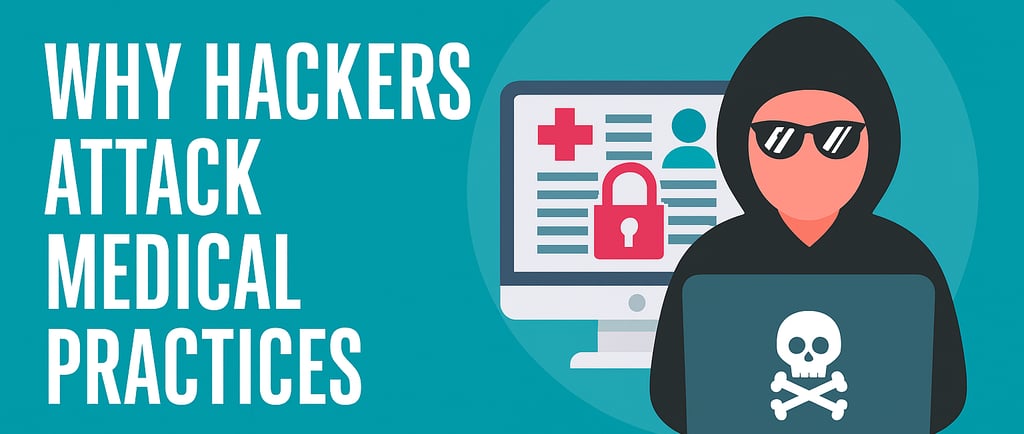
Why Hackers Attack Medical Practices — and What They’re Really After
Healthcare practices—whether a small family clinic or a multi-provider specialty office—have become one of the most targeted industries for cyberattacks. Many medical professionals assume, “We’re just a small practice. Why would a hacker come after us?”
The truth is: small healthcare organizations are among the easiest and most profitable targets for cybercriminals.
Here’s why hackers attack medical practices and what they’re hoping to find once they get in.
1. Patient Records Are Worth More Than Credit Cards
In the criminal marketplace, medical records are up to 20–50 times more valuable than credit card numbers. Why?
Because medical data includes everything a criminal needs to steal a person’s identity for years—not just make a few unauthorized purchases.
A medical record can include:
Full name and address
Social Security Number
Insurance details
Treatment history
Date of birth
Payment information
Prescription data
Criminals use this data for:
Filing fraudulent insurance claims
Obtaining prescription drugs illegally
Opening credit accounts
Committing tax fraud
Selling full identity profiles on the dark web
In short, a medical chart is a gold mine.
2. Small Practices Often Have Weak Cybersecurity
Hackers know that smaller healthcare practices usually don’t have the:
Budget of a hospital
Full-time IT staff
Enterprise-grade security tools
Regular cybersecurity audits
This makes them “soft targets.”
Common weaknesses include:
Outdated operating systems
Weak passwords
Unpatched medical devices
Unsecured Wi-Fi
Old firewalls
Lack of 24/7 monitoring
No multi-factor authentication (MFA)
Poor employee training
Hackers often exploit the easiest path: human error.
A single employee clicking a bad email is enough to breach an entire practice.
3. Healthcare Data Cannot Be Replaced
If a bank is hacked, they freeze accounts and issue new cards. Problem solved.
But if your practice’s:
Patient charts,
Imaging files,
Billing systems, or
Appointment schedules
…are encrypted or stolen, you cannot simply recreate them.
This is why ransomware attacks on healthcare are so effective—the practice has to pay, or they can’t operate, bill, or provide care. Cybercriminals know this and intentionally target providers.
4. Medical Devices Are Easy Entry Points
Many practices use devices that can connect to the network:
X-ray machines
EKG systems
VoIP phones
Ultrasound equipment
Patient check-in kiosks
Fax servers
Lab analyzers
Most run outdated operating systems that cannot be easily patched.
Hackers love these devices because:
They’re usually forgotten
They’re not monitored
They don’t support modern security controls
They create hidden entry points into your network
Once the attacker gets into the network through one of these devices, they quietly move deeper into the system.
5. Billing Data and Insurance Information Are Extremely Valuable
Hackers often specifically look for:
Billing statements
Insurance authorization files
CMS documents
Scanned IDs and insurance cards
Why? Because insurance fraud is a billion-dollar criminal industry.
Cybercriminals use stolen insurance information to:
File fake claims
Bill insurance providers for phantom treatments
Order medical equipment
Obtain prescription medications
It’s low risk, high reward—and difficult for victims to detect quickly.
6. Healthcare Staff Are Under Heavy Workload and Pressured Environments
Medical offices are busy. Staff are focused on patient care and operations, not cybersecurity.
Hackers take advantage of:
Rushed email checks
Quick logins on shared computers
Staff bypassing security policies to “get things done”
Overworked employees who aren’t trained on phishing tactics
This makes phishing emails extremely effective in the medical field.
7. Ransomware Disrupts Patient Care—Giving Hackers Leverage
When criminals want a guaranteed payout, they target healthcare.
Why?
Because ransomware in a medical practice:
Stops appointments
Blocks access to treatment plans
Prevents billing
Interferes with lab orders
Halts prescription e-prescribing
Delays insurance reimbursement
Clinics cannot operate without their technology.
Hackers know that downtime in healthcare is life-threatening, so practices are more likely to pay quickly.
8. HIPAA Violations Are Profitable for Cybercriminals
If a breach occurs, not only does the hacker make money—the practice is fined.
Hackers exploit this by threatening:
Public release of patient data
Reporting the breach to HHS
Destroying backups
Publishing medical images
Selling PHI immediately
This is known as “double extortion.” The attacker gets paid twice: once by the victim, and again by selling stolen data.
9. Business Email Compromise (BEC) in Healthcare Is Very Lucrative
Hackers often break into:
Office managers’ inboxes
Billing department email accounts
Provider email accounts
From there, they can:
Redirect insurance payments
Change bank routing information
Send fake invoices to patients
Trick staff into paying fraudulent bills
Request wire transfers
This type of fraud is silent, long-lasting, and extremely profitable.
10. Protected Health Information Never Expires
Credit cards can be canceled. Passwords can be changed.
But patient identity and medical history last a lifetime.
A stolen patient record may circulate on the dark web for 10+ years, continuing to generate profit for criminals.
That long-term value makes healthcare data the most desirable type of stolen data in the world.
Hackers don’t attack medical practices because they’re big.
They attack them because:
They store valuable data
They rely on that data to operate
They cannot afford downtime
They often lack strong cybersecurity controls
This combination makes healthcare one of the most vulnerable industries in the world.
Final thought: Every Medical Practice is a target! But It Doesn’t Have to Be a Victim. Cyber One Information Technology delivers enterprise-grade cybersecurity designed specifically for healthcare practices. We help you stay secure, compliant, and operational.
Contact Cyber One Information Technology today for a free security assessment.
For more info visit www.CyberOneInfo.com
Richard Medina, Certified Ethical Hacker https://www.linkedin.com/in/richme/